

Sun Tracking Kit
Discover the fascinating relationship between Earth’s axial tilt and seasonal solar patterns with the sun path tracking kit designed for astronomy and earth science education.
Due to Earth’s axial tilt, the sun’s apparent path across the sky varies dramatically throughout the year. The sun rises higher during summer months and follows a lower trajectory in winter. This hands-on kit enables students to visualize these celestial mechanics through systematic shadow tracking and path mapping.
A centrally positioned wax pencil casts shadows on the polystyrene hemisphere domes as the sun moves across the sky. Students can use the wax pencil to mark each shadow position at regular intervals throughout the day, creating a precise arc that represents the sun’s apparent motion. This process reveals the fundamental astronomical concept that the sun is not directly overhead at noon in most locations, demonstrating how Earth’s rotation and orbital position affect our perception of solar movement.
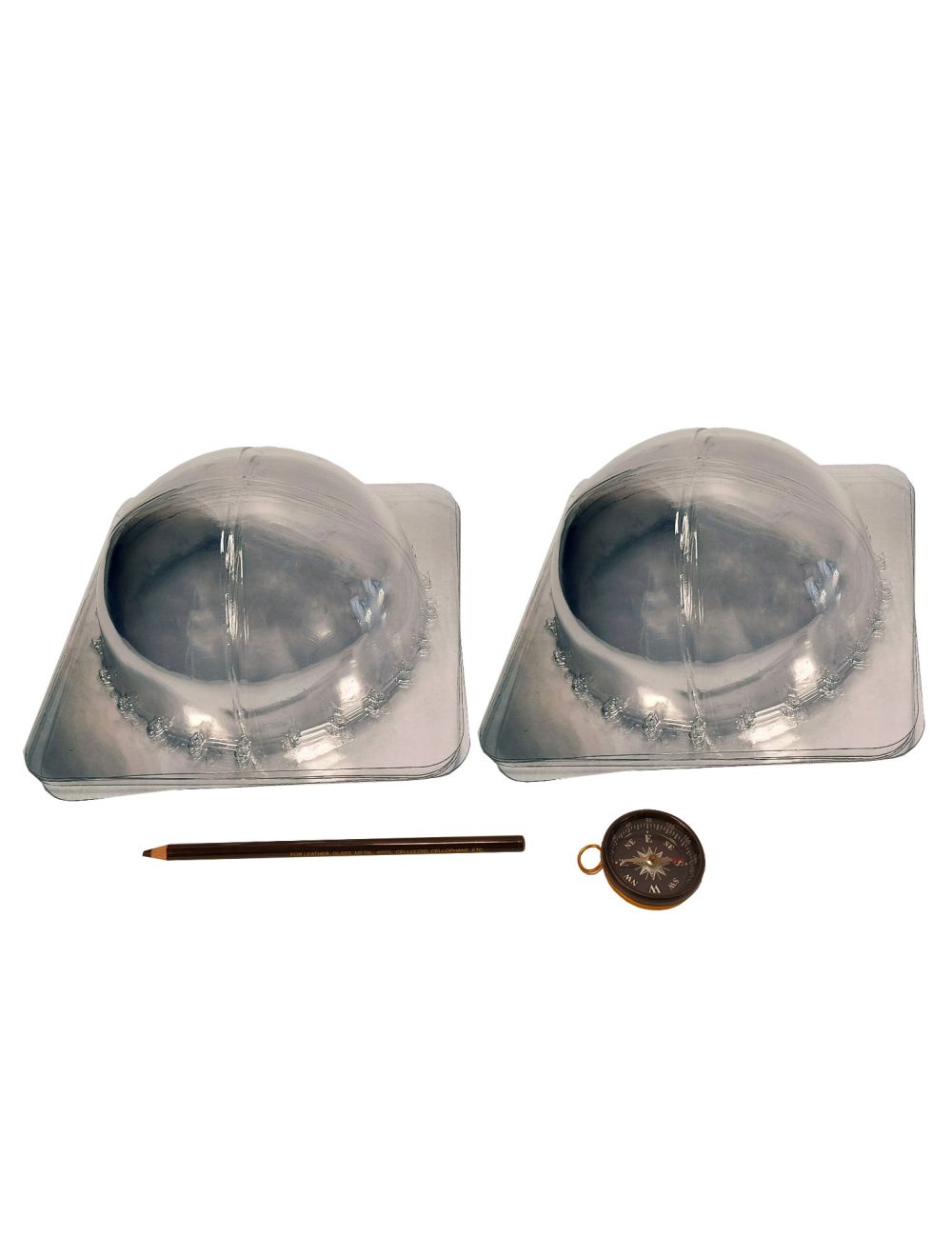
Includes 10 polystyrene hemisphere domes, a compass, wax pencil and activity guide. Accommodates groups of up to 10 students and supports both single-day observations and extended multi-month studies. By repeating observations across different seasons, students can compile comprehensive data showing how solar declination changes throughout the year, connecting classroom theory to observable astronomical phenomena.
- Ideal for astronomy and earth science curriculum integration
- Complete 10-student kit with hemisphere domes and tracking tools
- Demonstrate seasonal solar patterns and Earth’s axial tilt effects
- The hemisphere are washable and can be used multiple times
- Downloadable activity guide
Discover the fascinating relationship between Earth’s axial tilt and seasonal solar patterns with the sun path tracking kit designed for astronomy and earth science education.
Due to Earth’s axial tilt, the sun’s apparent path across the sky varies dramatically throughout the year. The sun rises higher during summer months and follows a lower trajectory in winter. This hands-on kit enables students to visualize these celestial mechanics through systematic shadow tracking and path mapping.
A centrally positioned wax pencil casts shadows on the polystyrene hemisphere domes as the sun moves across the sky. Students can use the wax pencil to mark each shadow position at regular intervals throughout the day, creating a precise arc that represents the sun’s apparent motion. This process reveals the fundamental astronomical concept that the sun is not directly overhead at noon in most locations, demonstrating how Earth’s rotation and orbital position affect our perception of solar movement.
Includes 10 polystyrene hemisphere domes, a compass, wax pencil and activity guide. Accommodates groups of up to 10 students and supports both single-day observations and extended multi-month studies. By repeating observations across different seasons, students can compile comprehensive data showing how solar declination changes throughout the year, connecting classroom theory to observable astronomical phenomena.
 WARNING: Can expose you to Styrene, a carcinogen. See www.P65Warnings.ca.gov.